
Natureprof
Articles / "Cosmeceuticals" vs "Cosmetics": The Correct Understanding Under Thai Law That Brand Owners, Investors, and Consumers Should Know
"Cosmeceuticals" vs "Cosmetics": The Correct Understanding Under Thai Law That Brand Owners, Investors, and Consumers Should Know

Articles : "Cosmeceuticals" vs "Cosmetics": The Correct Understanding Under Thai Law That Brand Owners, Investors, and Consumers Should Know

"Cosmeceuticals" vs "Cosmetics": The Correct Understanding Under Thai Law That Brand Owners, Investors, and Consumers Should Know

27 May 2026

Get the terminology right under the law before building a cosmeceutical brand

Contact Us!

Get the Terminology Right Under the Law Before Building a Cosmeceutical Brand

Over the past several years, the word "cosmeceutical" has become widely discussed in the beauty and skin health industry. Many brands use this term in marketing to project an image of confidence, suggesting their products have properties "superior to ordinary cosmetics" and "close to medicine." But under Thai law, the truth is that "cosmeceutical" is not a product category recognized by law.

"Cosmeceuticals" vs "Cosmetics": The Correct Understanding Under Thai Law That Brand Owners, Investors, and Consumers Should Know

In This Article, NatureProf Will Help You Understand Deeply

How "cosmeceuticals" and "cosmetics" differ under the law · Why the term "cosmeceutical" can only be used for marketing · Which Act products called "herbal cosmeceuticals" actually fall under · And how brand owners, investors, and consumers should act correctly

Why the Word "Cosmeceutical" Creates Confusion in the Thai Market

Why the Word "Cosmeceutical" Creates Confusion in the Thai Market

The word "cosmeceutical" comes from combining "pharmaceutical" with "cosmetic," to convey a product with properties midway between a drug and a cosmetic — that is, "used for beauty, but containing scientifically active ingredients that act deeply, like a drug." Abroad, such as in the United States or Europe, the term cosmeceutical is also used; but legally, the U.S. FDA states clearly that "there is no law recognizing the cosmeceutical category separately." Any product must be classified only as a drug or a cosmetic.

The Same Principle in Thailand

The Food and Drug Administration (FDA), Ministry of Public Health, divides health products into 6 main categories: food, drugs, cosmetics, herbal products, medical devices, and hazardous substances.

Legal Documents Must Be Clear

When a brand uses the word "cosmeceutical," it must clearly understand that, in legal documents, the product must still be registered only as a "cosmetic" or an "herbal product."

The Legal Definitions of "Cosmetic" and "Cosmeceutical" in Thailand

Thai law clearly defines the meaning and scope of each product category — even though the term "cosmeceutical" is widely used in the market.

Cosmetic (under the Cosmetics Act B.E. 2558 / 2015)

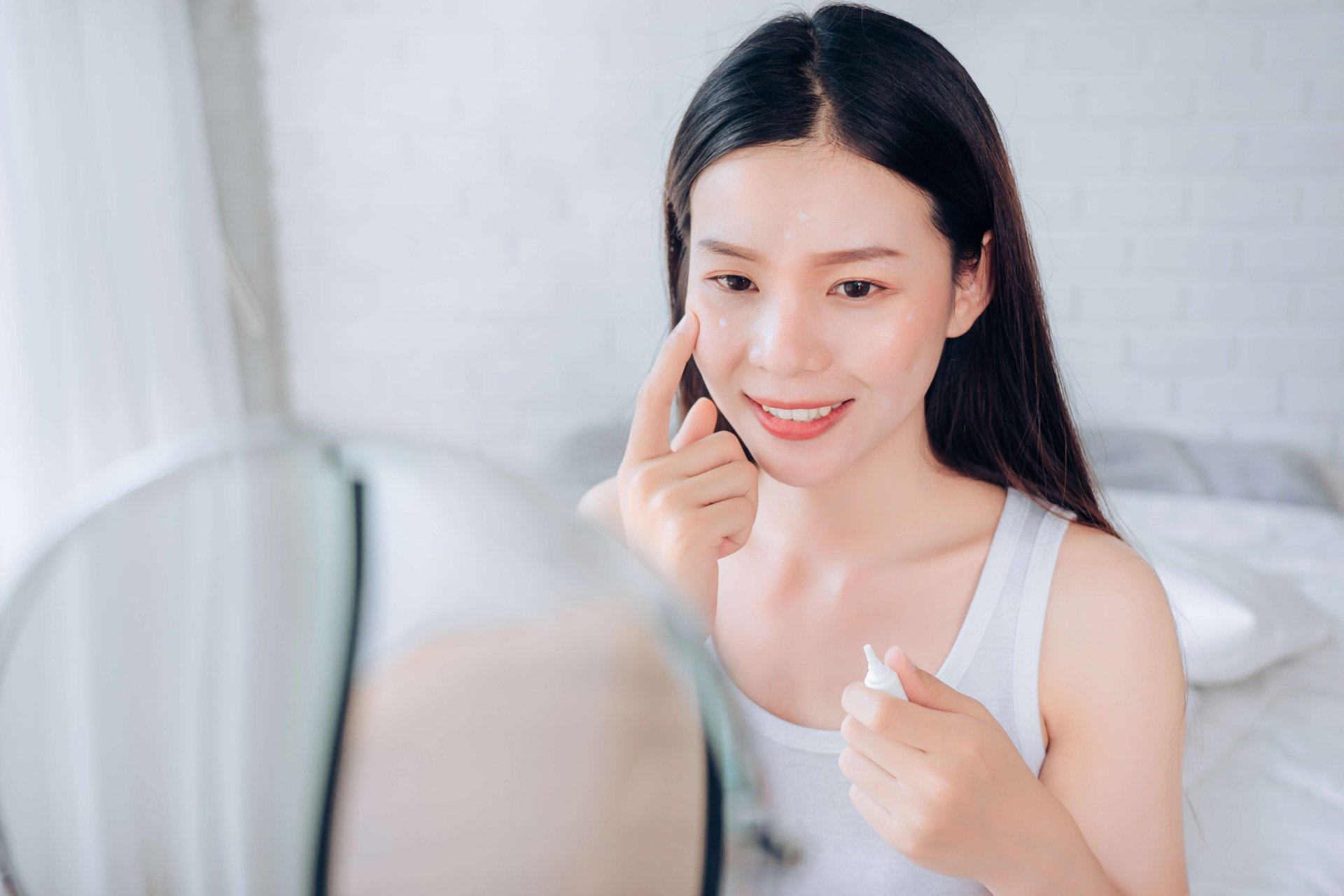
Section 4 states: "A cosmetic means a substance intended for use on the external parts of the body by means of applying, rubbing, massaging, sprinkling, spraying, dropping, inserting, fuming, or any other method, for the purpose of cleansing, beautifying, altering appearance, deodorizing, or keeping various parts in good condition" — used externally for beauty and hygiene, without affecting the internal structure or function of the body. Examples: moisturizers, sunscreen lotion, shampoo, perfume, lip balm, soap.
Cosmeceutical

This term does not appear in Thai law. It is not in the Cosmetics Act, nor the Drug Act, nor the Herbal Products Act, but is used in marketing to convey that a product contains bioactive substances — such as vitamin A (retinol), fruit acids (AHA), peptides, or herbal extracts tested in laboratories. The FDA confirms that "the term cosmeceutical has no legal basis in Thailand. Entrepreneurs may use this term in marketing, but must not advertise it as a drug or claim disease-treating effects."

Herbal Cosmeceuticals and Market Trends

So Which Law Do "Herbal Cosmeceuticals" Fall Under?

In 2019, the Ministry of Public Health enacted the Herbal Products Act B.E. 2562 to regulate products that use herbal extracts to enhance health or beauty. Such products are a "middle bridge" between drugs and cosmetics — for example, herbal oils, herbal creams, and herbal lotions. Section 4 defines an "herbal product" as "a product containing herbs or herbal extracts as ingredients, intended for use to treat, alleviate, or prevent disease, or to nourish the body, enhance health, or for beauty." Therefore, what the market calls "herbal cosmeceuticals" must be registered as "herbal products" with the FDA's Herbal Products Division — not as cosmeceuticals as the name suggests.

  • Turmeric herbal cream (Curcuma longa cream)
  • Centella asiatica serum
  • Cold-pressed virgin coconut oil skin lotion
So Which Law Do "Herbal Cosmeceuticals" Fall Under?

Future Trends in the "Herbal Cosmeceutical" Market

The Thai beauty market is worth more than 250 billion baht per year and is trending upward continuously, driven by the "Natural & Functional Beauty" trend. Consumers are beginning to look for products with natural, safe extracts, making herbal cosmeceuticals a golden opportunity for Thai investors — but it must rest on a foundation of legal compliance and verifiable scientific data. Brands that can blend "Thai herbal wisdom" with "modern extraction technology," such as nano encapsulation, liposomes, or advanced biotech, will have high potential to compete in both domestic and international markets.

Future Trends in the "Herbal Cosmeceutical" Market

Understand It Correctly, Communicate Clearly, and Build a Sustainable Brand

"Cosmeceutical" is not a legal product category, but a marketing communication term. Therefore, brand owners and investors must understand the legal structure before developing and advertising products, to avoid legal risk and loss of market credibility. Consumers themselves should also realize that what matters is not the name written on the label, but the "correct notification number," "safe ingredients," and "verifiable test results." NatureProf believes that building a sustainable beauty industry must start with "correct understanding" and "transparent communication" among brands, investors, and consumers.

Building a sustainable cosmeceutical or herbal product brand must start with an understanding of the law and correct communication.

Perspectives for Brand Owners and Investors

(1) Understand the Legal Basis Before Building a Brand

The first thing a brand owner must know is which legal category your product falls under. Claiming the wrong category can result in the revocation of your notification number or prosecution — for example, if you make a "turmeric cream that cures acne" but notify it as a cosmetic, that is illegal, because "cure" is a drug property.

(2) The Word "Cosmeceutical" May Be Used, but Must Not Mislead Consumers

The FDA does not prohibit using this term in a trade name, but prohibits using it in a way that implies it is "a drug" — for example, "cosmeceutical cream that cures melasma" = wrong · "cosmeceutical herbal nourishing cream" = acceptable (if it implies nourishment, not treatment).

(3) Developing Herbal Cosmeceuticals Requires Supporting Scientific Data

Although you need not submit efficacy test results like a drug, a brand seeking to build trust should have laboratory test results, such as an irritation test, a tyrosinase inhibition test (related to skin pigment), and an active biomarker test for the efficacy of active substances.

(4) Investors Should Examine Readiness in Documentation and Registration

Before investing in any product, check whether the brand has complete documentation, such as the notification certificate or herbal product registration, a list of extracts with COA (Certificate of Analysis), a safety assessment report, and the factory's GMP documents.

Perspective for Consumers: Read the Label Right, Stay Safe

Many consumers believe that "cosmeceuticals" must be safer than ordinary cosmetics, but in reality the term cosmeceutical guarantees no safety. What consumers should check is:

  • Notification/registration number — Cosmetics: a 10- or 13-digit notification number (beginning with 10-x-xxxxxxx) · Herbal products: bear an HP registration number
  • Ingredients — avoid products that do not disclose ingredients or use the phrase "secret proprietary formula," because the FDA requires all key ingredients to be listed
  • Advertising claims — if there are words like "cure," "instant results," or "100% safe," be suspicious · Legally compliant products communicate cautiously, such as "helps nourish skin to look smoother" instead of "permanently reduces wrinkles"

Standards & Testing

Key differences between "cosmetics" and "cosmeceuticals/herbal products" in law and practice.

Governing Law

Cosmetics: Cosmetics Act B.E. 2558 (2015) | Cosmeceuticals/Herbal Products: Herbal Products Act B.E. 2562 (2019)

Regulator

Cosmetics: Food and Drug Administration (FDA) | Cosmeceuticals/Herbal Products: Herbal Products Division (FDA)

Purpose of Use

Cosmetics: for beauty, cleanliness, external nourishment | Cosmeceuticals/Herbal Products: to nourish, enhance health, or beautify using herbs

Main Ingredients

Cosmetics: synthetic substances, vitamins, or common natural substances | Cosmeceuticals/Herbal Products: Thai and foreign herbs, natural extracts

Registration

Cosmetics: notification via the e-Submission system | Cosmeceuticals/Herbal Products: registration requiring submission of the formula, extracts, and safety test results

Advertising

Cosmetics: prohibited from claiming drug-like properties such as "cures acne, melasma, wounds" | Cosmeceuticals/Herbal Products: may claim nourishment and health enhancement, but the word "cure" is prohibited

Penalties for Violation

Cosmetics: imprisonment up to 6 months or a fine up to 50,000 baht | Cosmeceuticals/Herbal Products: imprisonment up to 1 year or a fine up to 100,000 baht

References

Sources

  • Food and Drug Administration. (2015). Cosmetics Act B.E. 2558 (2015). Bangkok: Ministry of Public Health.
  • Ministry of Public Health. (2019). Herbal Products Act B.E. 2562 (2019). Government Gazette.
  • Food and Drug Administration. (2022). Guidelines for the Correct Advertising of Cosmetic Products.
  • Food and Drug Administration (U.S. FDA). (2023). Cosmetics Overview.
  • ASEAN Cosmetic Committee. (2017). ASEAN Cosmetic Directive (ACD) and ASEAN Cosmetic GMP Guidelines.
  • Ministry of Public Health Thailand. (2023). Guidelines on Herbal Product Registration.
  • NatureProf Research Team. (2025). Trends in Thai Herbal Cosmeceutical Industry. Internal publication.

Why You Should Read Articles by Natureprof

  • In-depth insights from our OEM/ODM and R&D specialists in cosmetics and herbal products
  • Grounded in real industry standards, regulations, and practices — not just advertising claims
  • Applicable to business planning, product development, and communicating correctly with consumers

Start a Project

Interested in Developing Your Product with Us?

Ready to develop herbal products or cosmeceuticals that comply with the law?

We Handle It All: Start Your Project Today

If you are a brand owner or investor who wants to develop herbal products or herbal cosmeceuticals that comply with the law, complete with scientific safety and efficacy test results, NatureProf (OEM / ODM manufacturer) has a team of experts in cosmetics, herbs, and biochemistry, ready to provide an end-to-end service from formula design, testing, and documentation to product registration. Contact us for more information.

Innovation from Nature, Ready for Market | Safe • Clean • Effective

Contact the Natureprof Team Today!