

When “fragrance” becomes a trade barrier: a critical turning point where Thai brands must understand EU Fragrance Allergen rules
In the world of beauty and cosmetic industries, “fragrance” is like the soul that shapes a brand’s unique identity. At the same time, it is fast becoming one of the steepest “trade barriers” for Thai brand owners who lack understanding of international regulatory frameworks.
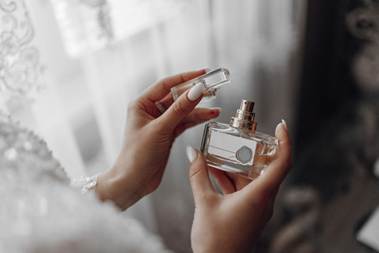
Image name : New EU Fragrance Allergen Regulation : The Key Hurdle Cosmetic Brands Must Clear Before Going Global
Most recently, the European Union (EU) has shaken the global cosmetic industry by dramatically expanding the list of “fragrance allergens that must be declared on labels” (Declarable Fragrance Allergens). This is not a minor tweak to paperwork—it is a structural overhaul of formulation development and supply-chain management that brands worldwide must pay close attention to.
This article will walk you through the key details of the new rules, analyze their impact on manufacturing, and outline strategic responses that brand owners need to prepare—whether you aim to benchmark your product to global standards or export to the EU and international markets.
The beginning of change : from 26 to 80+ fragrance allergens
For decades, cosmetic manufacturers have been familiar with the previous framework (Regulation EC No 1223/2009), which required labeling of 26 fragrance allergens when their concentration exceeded specific thresholds (0.001% for leave-on products and 0.01% for rinse-off products).
However, the Scientific Committee on Consumer Safety (SCCS) of the European Union has conducted further research and found that many additional fragrance substances also have the potential to cause sensitization in humans.
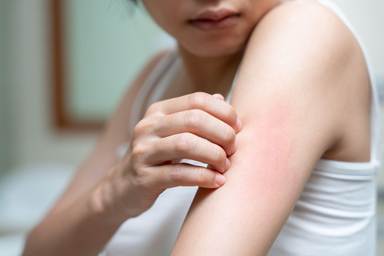
Image name : New EU Fragrance Allergen Regulation : The Key Hurdle Cosmetic Brands Must Clear Before Going Global
Key elements of the new regulation
The European Commission has issued a new regulation (Commission Regulation (EU) 2023/1545), which is already in force. The main points include:
● Expanded scope: The number of fragrance allergens that must be declared on labels has increased from 26 items to more than 80 items (including numerous natural extracts and pure essential oils).
● Transparency: The goal is to enable consumers with known allergies to easily avoid specific substances.
Transition period for adjustment
Although the regulation has been published, the EU has provided a transition period—which is still quite tight from a formulation-adjustment perspective:
● For new products placed on the market: New formulations must comply with the new rules within approximately 3 years (ending around mid-2026).
● For existing products already on the market: These must be brought into full compliance within 5 years (ending around mid-2028).
Structural impacts : when “formula” and “label” must be rebuilt
This change has far-reaching effects—it is much more than just reprinting a new sticker. Brand owners and manufacturers will face three major categories of challenges:
Impact on formulation
This is the most complex area. The perfume (fragrance compound) or essential oils you currently use may contain hundreds of individual chemical constituents.
● Natural extracts caught in the crossfire:
The new regulation specifically identifies constituents of essential oils such as ylang-ylang, citronella, and rose oil. In the past, “natural” or “organic” brands often highlighted these as key selling points. Today, many of their components are classified as fragrance allergens that must be declared on the label.
● Scent modification:
If a brand wants to avoid listing a long series of chemical names on its packaging, perfumers may need to rework the fragrance formula by removing or reducing certain molecules. This can change the olfactory profile and “dimension” of the scent compared with the original.
Impact on packaging & labelling
As the number of allergens that must be listed increases from only a few items to several tens of substances, space on the label (artwork space) becomes extremely valuable.
● Not enough label space:
For small products such as lipsticks, eye creams, or small serum bottles, printing English chemical names that are 50–60 characters long is practically impossible.
● Packaging costs:
Brands may need to redesign outer boxes or adopt solutions such as peel-off labels, multi-layer labels, or QR codes (if permitted in future revisions; at present the focus remains on on-pack declaration).
Impact on the supply chain
● Documentation burden:
Brand owners will need up-to-date Certificates of Analysis (COA) and detailed Allergen Declarations from fragrance suppliers. If your fragrance supplier is not an internationally standardized company, they may be unable to provide this level of detail—making notification or export impossible.
Turning crisis into opportunity : strategies for modern brand owners
While most brands see this as a “burden,” visionary brands will recognize it as an “opportunity” to elevate themselves to global standards. Here are strategic directions you should consider:
Portfolio audit: checking where you stand today
● Review your formulas:
Audit all current SKUs to identify which use high-risk fragrance compounds or essential oils.
● Talk to your OEM/ODM factory:
Ask your manufacturing partner whether they are aware of these new requirements and whether their fragrance suppliers are ready to provide documentation in line with the new standards.
“Clean Beauty” and “Hypoallergenic” strategies
Instead of treating allergens as the enemy, you can turn this shift into a chance to develop “allergen-free fragrance” products or use fragrances specifically designed to exclude key allergens.
● New selling points:
You can position your product as one that uses carefully selected fragrance ingredients with a higher safety margin, truly suited for sensitive skin. This aligns with strong growth trends in both European and Asian markets.
Preparing for export (Export readiness)
Compliance with EU law is effectively the best “passport” your product can have. Because EU standards are among the strictest in the world, once your products meet them, you will be well positioned to export almost anywhere: ASEAN, China, the Middle East, and other regions that often reference European safety benchmarks.

Image name : New EU Fragrance Allergen Regulation : The Key Hurdle Cosmetic Brands Must Clear Before Going Global
A worthwhile investment : why choosing the right partner matters more than buying new machines
Adapting to this new regulatory landscape is not about buying new equipment—it is about investing in “know-how” and “data.”
Many small and even large players stumble because they choose manufacturing partners who “only follow instructions” but are “not up to date.” After products are fully developed and produced, they discover they cannot be exported due to fragrance composition issues, or that shipments are rejected because the labels fail to meet regulatory criteria.
A key question you must ask is: Does your current OEM factory have sufficient international-level expertise in regulatory affairs (registration and compliance) to support your growth?
Natureprof : the strategic partner that helps you break through regulatory barriers
At Natureprof, we do not see ourselves as just a contract manufacturer. We act as your “lab partner”—your dedicated R&D and regulatory team behind the brand. We thoroughly understand the impact of the new EU fragrance allergen rules and are prepared to support our partners in every dimension.
Global fragrance network
● Natureprof partners with leading global fragrance houses (for example, from France, Switzerland, and other fragrance hubs).
● We have access to fragrance databases where formulas have already been adjusted to comply with the new EU regulation.
● We maintain a portfolio of “allergen-free” and “low-allergen” fragrances for clients to choose from, enabling strong selling points focused on gentleness and skin comfort.
Regulatory expertise
● Our team is highly familiar with regulations in Thailand (FDA) and overseas markets.
● We help calculate the levels of fragrance allergens in the final product to determine exactly which substances must be declared on the label.
● We prepare and manage the Product Information File (PIF), which is essential for EU market entry and other exports.
Proactive R&D
● We do not wait until the last minute before legal deadlines—we encourage clients to adjust formulas in advance.
● If you want to keep the same scent, we can work closely with perfumers to re-engineer the fragrance so it remains as close as possible to the original while reducing allergen content.
● If you are building a new brand, we can design “clean” formulas from day one, so you can scale globally without having to reformulate later.
Global standards are the heart of long-term brands
The new EU fragrance allergen rules may seem complicated for businesses that are not prepared. But for those who are ready, this regulation becomes a market filter: only brands that stand firmly on quality and transparency will win the loyalty of modern consumers.
Do not let gaps in regulatory knowledge become the ceiling that limits your business growth. Let Natureprof handle the technical and regulatory complexity so you can focus fully on branding and marketing. Together, we can build global-standard manufacturing into your brand from the very beginning.
Ready to elevate your brand to export standards?
If you are concerned about fragrance ingredients, or wish to develop cosmetic formulas that are safe, free from prohibited substances, and export-ready, you can consult Natureprof’s specialists in R&D and product regulations at any time.