

The New Industry Standard : Beauty Proven by Clinical Tests
In recent years, the Thai cosmetics industry has continued to grow steadily, both in terms of market value and the number of entrepreneurs entering the beauty business. However, amid fierce competition, creating true “differentiation” for products no longer depends only on marketing concepts or packaging. What is becoming the new standard of the industry is “scientific credibility” that can truly prove results in a verifiable way. At the heart of this is clinical testing.
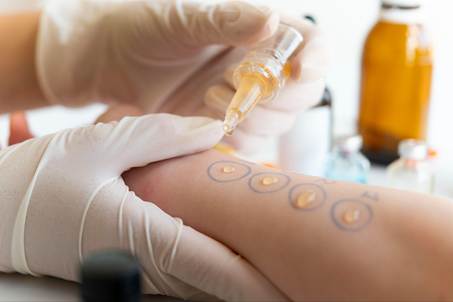
Image name : Clinical Testing : A Major Step Toward Raising a New Standard in Thai Cosmetic Products
Leading global brands place great importance on clinical testing to confirm that products launched to the market are not only safe, but also deliver real results as claimed. This trend is increasingly expanding to Thai brands, especially innovation-driven brands and business owners who aim to elevate their standards from SME level to international level.
The Problem of Claims in the Thai Cosmetic Market
Today, “claims” have become one of the issues that create significant misunderstanding among consumers. Many brands tend to use research results of “extracts or active ingredients” directly as selling points. For example, stating that a certain extract helps reduce wrinkles or increases hydration. But when we look at the real formula in detail, it may turn out that the dosage used in the formula is not at the level that produced results in the research. In some cases, when several ingredients are combined, they may reduce each other’s efficacy in unpredictable ways.
In addition, there are cases where manufacturers have not conducted stability testing (Stability Test) or compatibility testing (Compatibility Test) of the formulation. This can cause the product formula to change during long-term storage, resulting in consumer experiences that do not match the claims on the label.
As modern consumers gain greater access to information, especially scientific information from international sources, common questions that arise include: “Does it really work?”, “Has it been tested on real people?” These questions reflect a shift in market expectations and signal to business owners that they must pay more attention to evidence-based data rather than mere references.
What Is Clinical Testing?
Clinical testing refers to scientific studies conducted under the supervision of medical experts or dermatology specialists to evaluate both the safety and efficacy of products in real humans.
In general, testing in the cosmetics industry can be divided into several levels, including:
- In-Vitro Test – Testing at the level of cells or tissues to study the mechanisms of active ingredients.
- In-Vivo Test – Testing in living organisms, such as tests in animal models or human volunteers.
- Consumer Perception Test – Evaluation of satisfaction from actual users under normal conditions of use.
- Clinical Test – Testing designed under ethical guidelines for human research, with physicians or qualified experts supervising each step of the process.
The key strength of clinical testing lies in systematic measurement, such as the use of dermatological instruments (Skin Analyzer, Corneometer, Cutometer) to measure skin hydration, elasticity, or wrinkle reduction levels. The results obtained can then be interpreted statistically and communicated transparently to consumers.
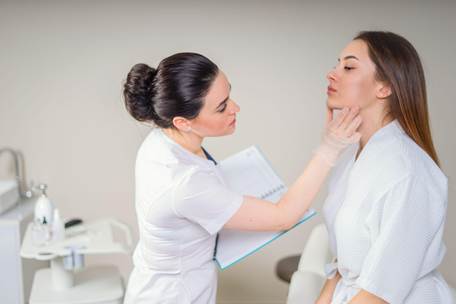
Image name : Clinical Testing : A Major Step Toward Raising a New Standard in Thai Cosmetic Products
The Role of Clinical Testing in the Cosmetics Industry
In the past, competition among Thai cosmetic brands often revolved around “creative marketing concepts.” Today, however, consumer trust increasingly depends on scientific data. Having clinical test results has therefore become a crucial factor that differentiates ordinary brands from high-quality brands.
- Confirming Results That Can Truly Be Proven
Clinical testing helps confirm that a product delivers the outcomes it claims. For example, it may help reduce wrinkles within 4 weeks or increase skin hydration by more than 30%. Such data builds far stronger confidence among consumers than simply referring to research on isolated extracts. - Strengthening Marketing Credibility
When real test data is available, brands can incorporate outcomes into their communication strategy, such as “tested by dermatological experts” or “proven in X volunteers.” These are messages that attract consumer attention and significantly increase trust. - A Tool for Ongoing Formula Development
Results from clinical testing also help formulators better understand the behavior of active ingredients under real usage conditions—such as absorption, skin feel after application, or how long efficacy is maintained throughout the day. This leads to continuous improvements and more refined formulas in future product versions.
Clinical Testing in the Thai Context
In Thailand, conducting clinical testing must fall within the framework of Human Research Ethics and the guidelines of the Ministry of Public Health. This ensures that research does not violate volunteer rights and is carried out safely.
Clinical testing centers in Thailand can be found in universities, hospitals, and private research institutes that have in-house dermatologists and research teams. Collaboration between the private sector and these institutions is continually increasing, as it enables Thai brands to generate scientific evidence that meets international standards within Thailand, without relying solely on overseas testing, which often entails high costs.
For business owners who are not yet ready to proceed directly to full-scale clinical testing, they can begin by preparing documents and conducting preliminary tests, such as:
● Stability Testing (Stability Test)
● Packaging Compatibility Testing (Compatibility Test)
● Skin Irritation Testing (Patch Test)
Once these steps are completed, the data can then be used to advance to formal clinical testing for official result confirmation.
Raising a New Standard for Thai Brands
The current trend among Thai brands is shifting from “image-driven marketing” to “evidence-based marketing.” New-generation brand owners recognize that communicating results through real data creates more sustainable differentiation.
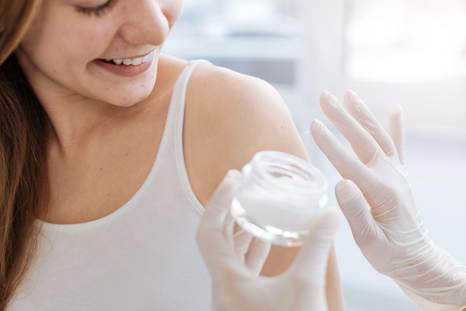
Image name : Clinical Testing : A Major Step Toward Raising a New Standard in Thai Cosmetic Products
Brands that have undergone clinical testing can leverage the results in impactful communication, such as:
● “Proven to reduce excess sebum within 14 days.”
● “Dermatologist-tested and non-irritating.”
These messages not only boost consumer confidence, but also reflect the brand’s professional development.
Clinical testing is also a powerful tool for building an international image, especially in overseas markets that place heavy emphasis on scientific data. If Thai brands can present products together with verifiable test results, they significantly increase their potential in business negotiations and in gaining recognition from international partners.
NatureProf’s Role in Supporting Thai Brands Toward New Standards
As an expert in cosmetic and herbal product development, NatureProf understands that brand success does not lie solely in having a “good formula.” It also requires scientific data that can be truly proven as a key foundation for modern marketing.
NatureProf offers comprehensive services, including:
● Scientific formulation development (Scientific Formulation)
● Preparation of essential technical documents such as Specification Sheet, Technical Data Sheet (TDS), Material Safety Data Sheet (MSDS), and Certificate of Analysis (COA)
● Consultancy on preliminary safety and efficacy testing strategies to prepare products before entering clinical testing
● Designing claim validation approaches that comply with Thai regulations and international guidelines
NatureProf is committed to supporting brand owners in developing “science-driven products” in a fully integrated way—from building the formula to preparing the data required for testing in accordance with academic standards.
Clinical Testing Is the Future of the Thai Cosmetics Industry
Clinical testing is not just an optional add-on step in cosmetic product development. It is a “key tool” that builds credibility for both brands and the industry as a whole. Results from clinical testing help brand owners gain deep insight into their products, communicate transparently with consumers, and move beyond competition based solely on image-driven marketing.
Raising the standard of the Thai industry to be on par with the global level requires collaboration among researchers, laboratories, and entrepreneurs to build a product development system grounded in real evidence-based data.
NatureProf (OEM factory / ODM factory) is ready to be your scientific partner, standing alongside Thai brand owners to help elevate products from concept to sustainable scientific credibility.
“If you are a brand owner seeking to develop products that stand out with scientific data, we are ready to provide free consultation on testing strategies and professional formula development.