
Get the legal fundamentals right before building a brand and investing in the Thai herbal business
Thailand’s herbal industry continues to grow steadily across multiple segments: health products, dietary supplements, and herbal cosmetics. Many brands are now looking at this market as a new opportunity that connects Thai traditional wisdom with modern scientific innovation. At the same time, the legal framework governing herbal products in Thailand has also become more stringent and systematic, especially after the promulgation of the Herbal Product Act B.E. 2562 (2019), which is now the main law specifically separating herbal product regulation from the former Drug Act.

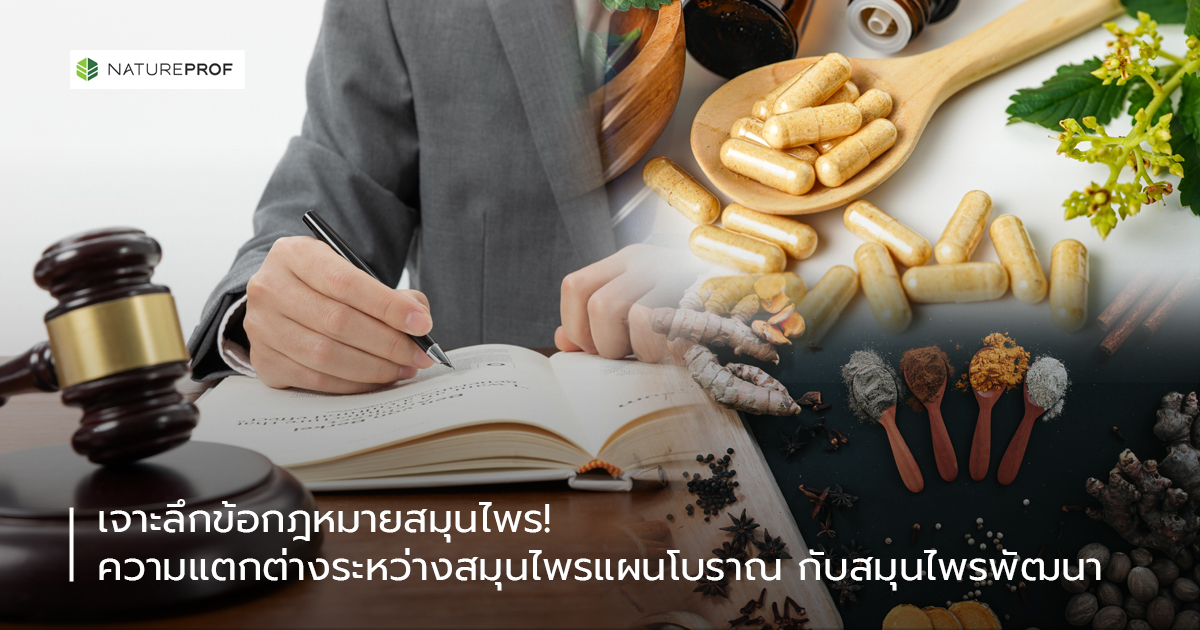
Image name : A Legal Deep Dive into Herbal Products : The Difference Between Traditional Herbal Medicine and Developed Herbal Products
For brand owners and investors, understanding this legal framework correctly not only reduces legal risk, but also lays a solid foundation for sustainable growth in the herbal business. Compliance with the standards of the Food and Drug Administration (FDA, อย.) and alignment with global trends in herbal product development are both essential.
Legal definition of “herbal products” under Thai law
The Herbal Product Act B.E. 2562 provides a detailed definition of “herbal products.” In essence, herbal products are products that have herbs as their main components and are used for treatment, cure, relief, or prevention of disease, as well as for health promotion or improving bodily functions. This definition excludes modern drugs, foods, and cosmetics.
Under this Act, herbal products are classified into several categories with different levels of regulatory control depending on their risk profile. The purpose is to ensure appropriate consumer protection while enabling the business sector to operate under clear and standardized rules.
Transition from the former Drug Act to the new Herbal Product Act
Before B.E. 2562 (2019), most herbal products were still categorized as traditional medicines. As such, licensing and quality control processes were conducted under the Drug Act, which did not fully correspond to the characteristics of modern herbal products that are often developed with advanced technology and innovation.
The issuance of the Herbal Product Act B.E. 2562 created a dedicated regulatory system to accommodate both traditional herbal products grounded in Thai wisdom and modern developed herbal products based on scientific advancement.
Under the new law, manufacturers, importers, and distributors of herbal products are required to obtain relevant licenses and comply with prescribed criteria, such as:
● Meeting herbal GMP (Good Manufacturing Practice) standards for production facilities
● Implementing quality control of raw herbal materials
● Conducting tests for active ingredients and contaminants
● Preparing complete technical documentation for product registration
Types of herbal products in Thailand
Herbal products in Thailand can be broadly divided into two major categories:
● Herbal products classified as “medicinal products from herbs”
● Herbal products classified as “health products”
Each category is subject to different licensing procedures and levels of permissible health or therapeutic claims, as outlined below.
1. Medicinal products from herbs or traditional herbal medicine
This group refers to products that are intended directly for the treatment, cure, or relief of disease, with herbs as the main components. They are often based on Thai traditional formulations or local wisdom, such as:
● Fah Talai Jone (Andrographis paniculata) remedies
● Traditional Thai herbal tonic pills
● Herbal teas and decoctions
● Compressed herbal tablets or herbal pills
The core characteristic of this category is reliance on traditional knowledge and historical use as the primary evidence for approval. The formulations are typically those that have been widely and continuously used in Thai society over a long period.
Registration of such herbal medicinal products is therefore based on documentary evidence of traditional formulations and historical usage, rather than requiring full-scale modern clinical trials as in the case of conventional pharmaceuticals.
Most traditional herbal products are registered with the Food and Drug Administration as “herbal product formulations.” Once approved, they receive a registration number beginning with the letter “G,” indicating that they are legally recognized herbal products under Thai law.
The key advantages of this category include the ability to leverage Thai wisdom as a unique selling point and relatively lower research costs, as traditional use data can be used as supporting evidence. However, limitations include variability in product quality among manufacturers and challenges in expanding into international markets due to a lack of scientific data recognized by global standards.
2. Developed herbal medicines or innovative herbal products
This group comprises products that have been further developed from traditional herbal remedies using scientific and technological methods, such as:
● Extraction and concentration of active compounds
● Use of liposomal or microencapsulation technology to enhance absorption or stability
● Development of user-friendly dosage forms (e.g., capsules, gels, softgels)
● Use of standardized herbal extracts in cosmetics, supported by bioactivity or efficacy testing
Developed herbal products must be supported by systematic scientific data covering safety, efficacy, and product quality. This often includes laboratory test results and, in some cases, clinical data to demonstrate that the active substances in the product deliver the claimed effects.
Consequently, regulatory approval for this type of herbal product involves more complex steps and requires comprehensive technical documentation and test reports.
The strengths of developed herbal products lie in their clear innovation-driven positioning, higher value creation, and greater export potential. They meet the expectations of modern consumers who place high importance on scientific evidence. On the other hand, they require higher investment costs, longer R&D and approval timelines, and specialized human resources, such as chemists, herbal researchers, and experts in manufacturing standards.
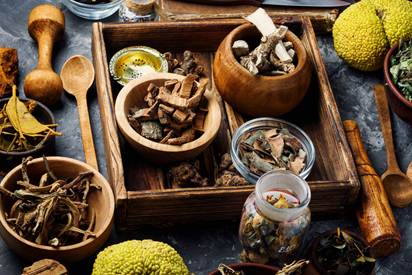
Image name : A Legal Deep Dive into Herbal Products : The Difference Between Traditional Herbal Medicine and Developed Herbal Products
Key differences between traditional herbal medicine and developed herbal products
|
Topic |
Traditional herbal medicine |
Developed herbal products |
|
Primary objective |
Used according to traditional wisdom for the treatment or relief of symptoms |
Developed based on scientific principles to enhance efficacy and safety |
|
Supporting evidence for approva |
Relies on traditional formulations and documented historical use |
Requires scientific test data and may include clinical information |
|
Product forms |
Decoctions, herbal teas, herbal pills, powder forms |
Concentrated extracts, capsules, gels, creams, or technologically enhanced dosage forms |
|
Regulatory control |
Registered with the FDA based mainly on traditional formulations |
Subject to more stringent evaluation of quality and safety |
|
Target business segment |
Domestic markets, consumers who trust Thai traditional wisdom |
Premium markets and international markets |
|
Development cost |
Lower, suitable for new or small-scale entrepreneurs |
Higher, suitable for businesses with long-term development plans |
Key considerations for brand owners and investors
First, correctly classifying the type of herbal product from the very beginning is crucial for business operations. Misclassification can lead to delays in approval, rejection of applications, or even legal consequences.
Second, preparing quality and safety data is essential, especially for developed herbal products, which require laboratory test results and comprehensive raw material quality assessments.
Third, establishing a production system in accordance with herbal GMP is a legal requirement for manufacturers. GMP compliance serves as critical evidence of product quality and is a key condition for successful product registration.
Fourth, labeling and advertising must strictly comply with regulations issued by the Food and Drug Administration. This includes clearly indicating distribution channels, such as:
● General retail sale
● Sale restricted to specific licensed premises
● Use exclusively in healthcare facilities
In addition, labels and advertisements must not contain exaggerated claims or misleading statements.
Fifth, brand owners and investors should regularly monitor relevant government policies and announcements. Regulatory bodies such as the Thai FDA and the Department of Thai Traditional and Alternative Medicine continually refine their guidelines to align with international standards.
Strategic perspectives for brand building and investment
From a strategic standpoint, the Thai herbal business can grow along two distinct but complementary pathways:
- Development rooted in traditional wisdom
- Development driven by modern science
If an investor aims to build a brand that highlights Thai identity, local raw materials, simplicity, and a natural image, developing products in the traditional herbal medicine format may be the most suitable option. This path involves relatively lower costs and allows cultural heritage to be positioned as a core marketing advantage.
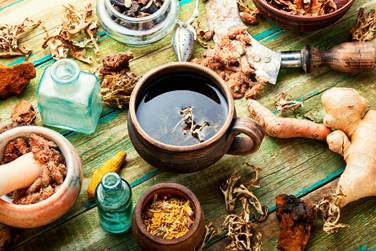
Image name : A Legal Deep Dive into Herbal Products : The Difference Between Traditional Herbal Medicine and Developed Herbal Products
However, if the goal is to expand into international markets, form partnerships with technology-based allies, and create high-value innovations, then developing products as modern, science-based herbal products will likely be more suitable. In this case, particular emphasis must be placed on:
● Scientific research
● Standardized testing of active compounds
● Obtaining certifications from international bodies such as ISO or COSMOS
Understanding the law in depth to drive a sustainable Thai herbal industry
A thorough understanding of laws governing herbal products not only ensures legally compliant business operations, but also enhances brand credibility in the eyes of consumers and investors.
The decision to pursue a “traditional herbal medicine” pathway or a “developed herbal product” pathway should begin with a careful assessment of organizational readiness, budget, and long-term market positioning.
From the perspective of NatureProf (OEM factory / ODM factory), the sustainable development of Thailand’s herbal industry should proceed along both pathways in parallel. Traditional herbal medicine reflects the foundation of Thai wisdom, while developed herbal products serve as a bridge that translates this wisdom into the language of modern science and global markets.
If entrepreneurs can effectively leverage the strengths of both sides, the Thai herbal business will not only thrive domestically, but will also be able to step confidently onto the global stage with stability and long-term sustainability.